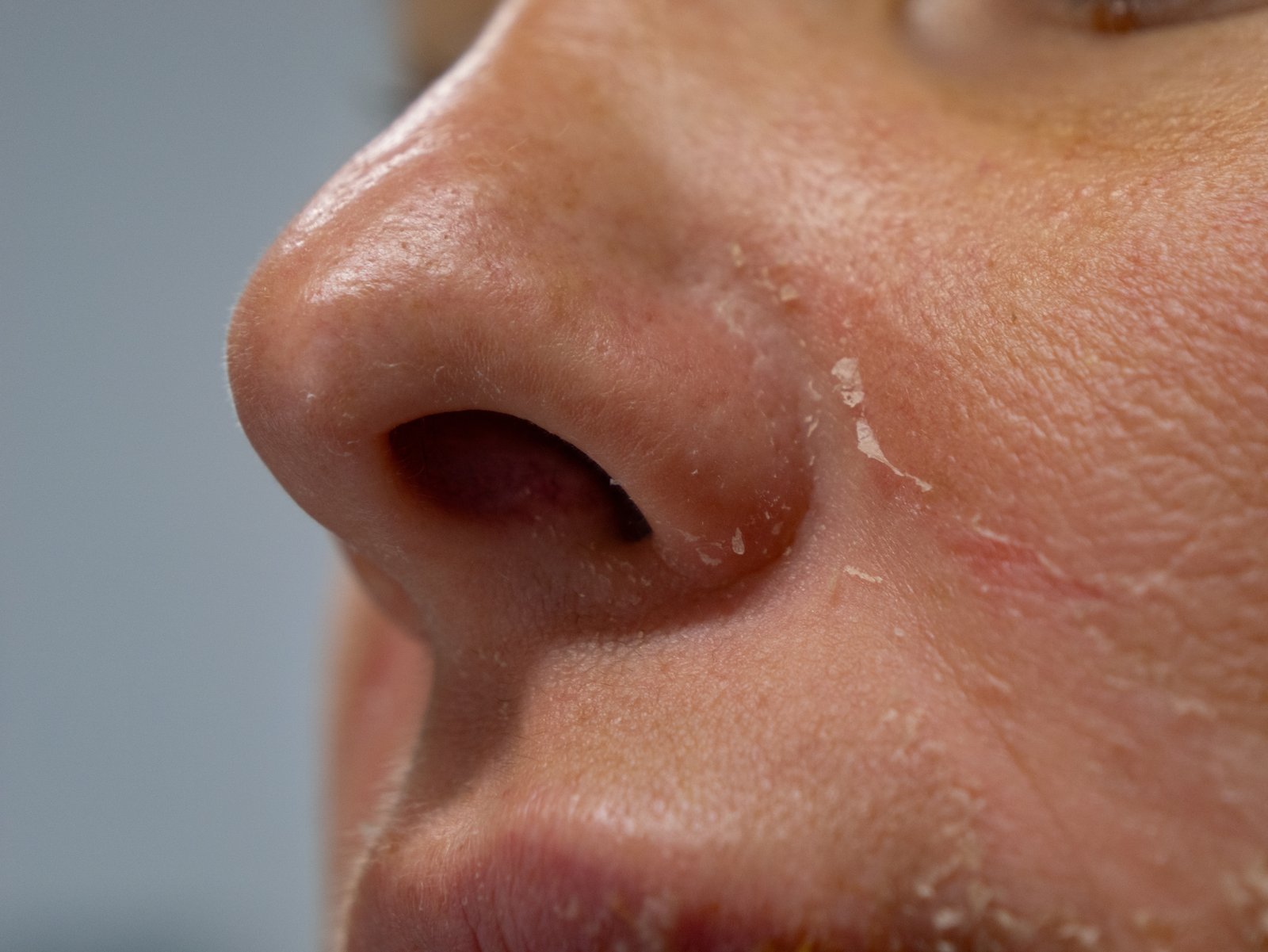
Most people troubleshoot a struggling skincare routine by changing products. Fewer people check whether their environment is quietly working against whatever they put on. Water hardness, weather, and pollution all have a measurable effect on your skin barrier, and none of them show up on an ingredient list.
Hard water and your skin barrier
Hard water, water with a high mineral content, has been linked to skin barrier problems in a growing body of research. Large-scale studies, including analysis from the UK Biobank, have found an association between domestic hard water exposure and higher eczema risk, and researchers now believe part of the mechanism involves how hard water interacts with soap and cleansers to leave residue on skin, disrupting the barrier rather than cleaning it fully. Ongoing clinical research is even testing whether installing water softeners in high-risk homes can reduce eczema development in infants, which tells you how seriously this link is being taken.
If you live somewhere with notably hard water and struggle with dryness or irritation that a normal moisturiser doesn’t fully resolve, the water itself is a genuine variable worth ruling out, not something to overlook in favour of buying yet another cream.
Climate does more than “dry out” or “hydrate” skin
Cold, dry air pulls moisture from skin faster than it can be replaced, which is why the same routine that works fine in summer can leave skin flaking in winter. Humidity works the other way, it can make oil production increase as skin relies less on its own barrier to retain moisture. This is part of why we ask about your environment during the assessment rather than treating your skin type as something fixed. The same skin can behave completely differently depending on where you live and what season it is.
Pollution and your barrier
Airborne pollutants, including fine particulate matter, have been linked in dermatology research to oxidative stress in skin, which can weaken the barrier over time and accelerate visible signs of aging. Unlike a bad ingredient choice, this is one you can’t always fix by changing what’s in your routine, though ingredients with antioxidant properties, including niacinamide, are part of how skincare tries to offset some of that damage.
Why this belongs in a skincare conversation at all
None of this means your products are failing you. It means the products are only ever half of the equation, and a routine that’s genuinely personalised has to account for the environment your skin is actually living in, not just what’s written on the bottle.
Take the free assessment and we’ll factor in your environment alongside your skin concerns, not treat them as separate problems.

You can own genuinely good products and still get mediocre results from them, because the order you apply them in changes how well each one actually works. The American Academy of Dermatology puts it plainly: the sequence of your routine affects how effective your products are, not just how it feels to use them.
The general rule: thinnest to thickest
The AAD’s guidance comes down to a simple structure: cleanse first, then treat, then moisturise and protect, then makeup if you wear it. Within the “treat” step, the finer rule is to go from the thinnest, most watery products to the thickest, richest ones. A watery serum applied after a heavy cream can’t absorb properly, it just sits on top and does very little.
Where hyaluronic acid actually belongs
This is one of the most commonly reversed steps we see. Hyaluronic acid works by drawing water in, so it needs to go on damp skin, right after cleansing, before anything else. Put it on dry skin, or apply it after a moisturiser has already sealed the surface, and it has far less water nearby to pull from. Follow it with your moisturiser within a minute or two, so the water it just drew in gets locked in rather than evaporating off.
Where retinol (or bakuchiol) belongs
Active treatments like retinol go on clean, dry skin, before moisturiser, so they can penetrate properly rather than being blocked by a layer of cream. This is also the step where the AAD’s caution about overuse matters most: layering multiple strong actives in the same step, several exfoliating acids plus retinol in one routine, for example, is a common way routines end up irritating skin rather than improving it. Introducing one active at a time, and giving skin time to adjust, matters more than most people expect.
Morning versus evening
Sunscreen goes last in a morning routine, applied after moisturiser, as the final protective layer against UV damage, not mixed in earlier in the stack. In the evening, that step is replaced by whatever treatment you’re using instead, since there’s no UV to protect against overnight.
Why “the right order” still isn’t the same for everyone
Even with the order right, the ingredients themselves still need to match your skin. The AAD’s own guidance stops at sequence, it doesn’t tell you which actives your skin can actually tolerate, or which ones are worth the layering in the first place. That’s the part personalisation actually solves.
Take the free assessment and get a routine built around the ingredients that fit your skin, in the order that actually lets them work.

A lot of skincare advice, and a growing number of AI-powered skin tools, are built and tested on a narrow range of skin tones. It’s a well documented problem: several audits of dermatology image datasets have found that darker skin is dramatically underrepresented, sometimes making up only a small fraction of the images used to train and validate skin analysis tools. That gap doesn’t stay theoretical. It shapes whose skin concerns get recognised accurately and whose don’t.
Why this isn’t just a fairness issue, it’s a functional one
Skin concerns don’t present the same way across all skin tones. Redness that’s obvious on fair skin can look completely different, or barely visible, on deeper skin, which is why tools trained mostly on lighter skin can miss inflammation or irritation in darker skin entirely. Hyperpigmentation, one of the most common concerns for melanin-rich skin, behaves differently in how it forms and how it responds to treatment compared with the same-named concern on lighter skin. A tool that was never shown enough examples of these patterns isn’t being unfair on purpose, it genuinely doesn’t have the data to recognise them.
What “built for every skin tone” actually requires
It’s not enough to say a product or tool “works for everyone.” Doing this properly means deliberately including a full range of skin tones in the data and the assessment questions from the start, not adding it later as an afterthought. It means asking about pigmentation and sensitivity in ways that reflect how those concerns actually show up on melanin-rich skin, rather than assuming one presentation is the default and everything else is a variation on it.
It also means being honest about where the science itself has gaps. Some ingredients are well studied across skin tones, others have a research base that skews heavily toward lighter skin, and a personalisation tool worth trusting should be upfront about that rather than pretending every recommendation is equally well evidenced for everyone.
How this shows up in your results
When you take the myskin.ai assessment, the questions about pigmentation, sensitivity, and how your skin has reacted to products in the past are designed to capture the full range of how those concerns present, not just the version that’s most commonly photographed in stock skincare imagery. It’s one of the reasons we ask more than “what’s your skin type” in the first place.
Take the free assessment and get ingredient recommendations built around your actual skin, not a default that was never designed with it in mind.
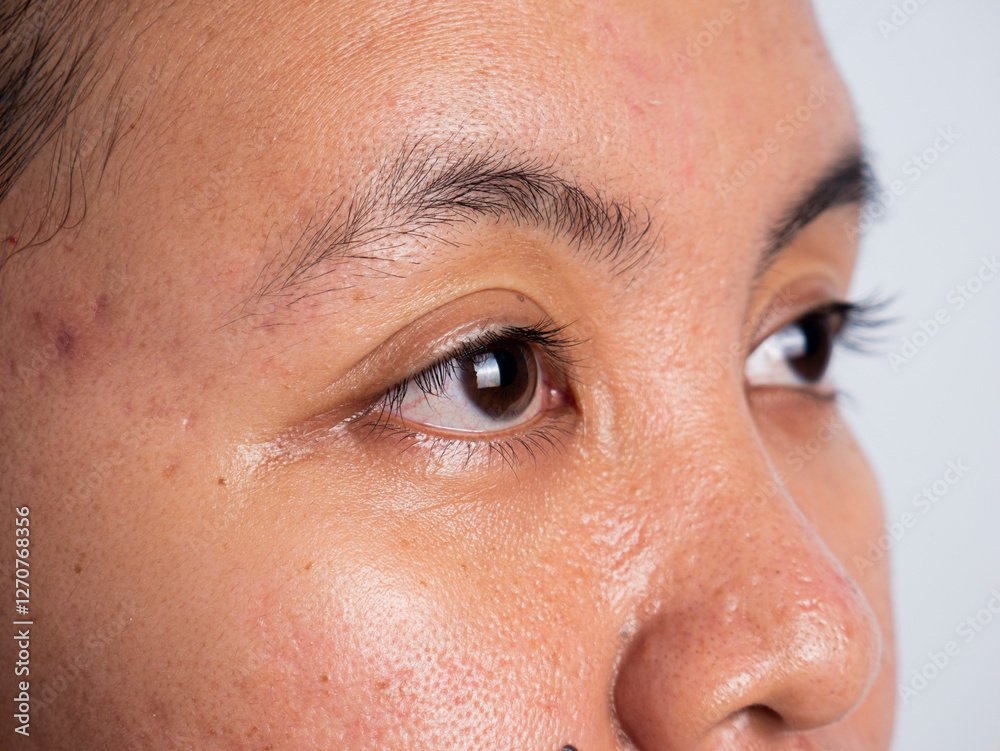
“Oily skin” is treated like a single category with a single fix: use a foaming cleanser, skip the moisturiser, look for anything labelled “mattifying.” In practice, we see oily skin show up for at least three completely different reasons, and using the same fix for all three is a big part of why so many oily skin routines don’t work.
Hormonal oiliness
Hormones directly influence how much oil your sebaceous glands produce, which is why oiliness often tracks with puberty, your menstrual cycle, pregnancy, or conditions like PCOS. This kind of oiliness tends to be genuinely excess production, and it’s the one case where an ingredient like niacinamide, which research suggests helps regulate sebaceous gland activity, or a gentle exfoliating acid can make a real difference.
Climate-driven oiliness
Humidity changes how much your skin needs to compensate on its own. In hot, humid conditions, skin often produces more oil simply because the environment is doing less of the moisture-retention work for it. Someone who calls themselves “oily” in a humid coastal city might not be oily at all somewhere drier, which is exactly why environment is part of what we ask about in the assessment rather than treating skin type as fixed.
Barrier-damage oiliness (the one people usually miss)
This is the counterintuitive one. When the skin barrier is stripped, often by over-cleansing, harsh actives used too frequently, or hot water, skin can respond by producing more oil to compensate for the moisture it’s losing. The instinct is to reach for something even more stripping, which makes the underlying damage worse and the oil production worse along with it. In this case the actual fix isn’t oil control, it’s rebuilding the barrier: a gentler cleanser, fewer active ingredients at once, and a moisturiser that hydrated skin genuinely needs, even if it feels wrong for skin that already looks shiny.
Why this matters for what you put on your face
Three people who all call themselves “oily” and follow the same generic oily-skin routine could be treating a hormonal issue with the wrong ingredient, ignoring their actual environment, or actively making a damaged barrier worse. None of that shows up in a skin type label, which only describes what your skin looks like right now, not why it’s behaving that way.
This information is for general education and isn’t a substitute for advice from a dermatologist, particularly if oiliness is sudden, severe, or linked to a diagnosed hormonal condition.
Take the free assessment and we’ll factor in your hormones, your environment, and your current routine before recommending anything, not just what your skin looks like today.

Ingredient lists are the most confusing part of skincare shopping. Niacinamide, hyaluronic acid, retinol, bakuchiol, they all sound like they belong on a chemistry exam, and most product pages don’t explain what any of them actually do to your skin. Here’s the plain-language version of the ingredients that come up again and again in our recommendations, and what the research actually says about each one.
Niacinamide: the multitasker
Niacinamide (a form of vitamin B3) is one of the few ingredients that shows up in routines for oily skin and dry skin at the same time, and that isn’t a contradiction. Research summarised by the Cleveland Clinic points to niacinamide supporting the skin’s lipid barrier, which helps skin hold onto moisture and keep out irritants. It has also been shown to calm inflammation, which is why it turns up in products aimed at redness from acne, rosacea, or general irritation, and separately, it appears to help regulate sebaceous gland activity, so it can take the edge off excess shine without stripping skin the way harsher oil-control ingredients do.
It will not shrink your pores (nothing topical does that), but by smoothing texture and calming redness it often makes pores look less obvious.
Hyaluronic acid: a hydrator, not a moisturiser
Hyaluronic acid gets lumped in with moisturisers, but it works differently. Moisturisers seal water into skin, while hyaluronic acid actually draws water in, thanks to its ability to hold many times its weight in moisture. That is why dermatologists generally recommend applying it to damp skin, so it has water nearby to pull in, and following it with a moisturiser to lock that hydration in place rather than letting it evaporate.
It plumps skin, smooths the look of fine dehydration lines, and gives makeup a better base to sit on, but on its own, in dry air, it can pull moisture from deeper skin layers instead of the air. Pairing it with a moisturiser isn’t optional, it’s the point.
Retinol (and its gentler cousin, bakuchiol)
Retinol has the longest track record of any anti-aging ingredient, and it earns it: it speeds up cell turnover and boosts collagen production, which is why it remains the benchmark most other ingredients get compared against. The tradeoff is tolerability. Retinol can cause dryness, flaking, and stinging, especially when someone starts using it too often or too strong a concentration too soon.
Bakuchiol is often marketed as “plant-based retinol,” and a randomised, double-blind study published in the British Journal of Dermatology in 2019 gives that claim some real backing. Over 12 weeks, bakuchiol and retinol produced statistically similar reductions in wrinkle surface area and pigmentation, but the retinol group reported significantly more scaling and stinging. It’s a smaller study than retinol’s decades of research, so it isn’t a like-for-like replacement in every case, but for people who want retinol-like results without the irritation, it’s a legitimate option worth knowing about.
Why the same ingredient can be wrong for you and right for someone else
None of these ingredients are universally “good” or “bad.” Niacinamide that soothes one person’s rosacea can feel unnecessary on skin that isn’t reactive to begin with. Retinol that transforms one routine can be too aggressive for skin that’s already compromised by a damaged barrier. This is exactly the gap a skin type label can’t close, it tells you nothing about which of these ingredients your specific skin will actually respond well to.
Take the free assessment and we’ll match you to the ingredients that fit your skin, your environment, and your routine, not just a generic list of what’s trending.
Welcome to WordPress. This is your first post. Edit or delete it, then start writing!